
Best International Casinos for Australian Players
 Available in US
A practical overview of offshore licensing, account checks, payments, bonuses and the limits of Australian protection.

Table of Contents
- What Australian Readers Need to Know About International Casinos
- International Casino Sites: What You May Find in the Game Lobby
- How to Read International Casino Reviews Without Treating Them as Guarantees
- International Casinos and the Limits of Australian Protection
- Real-Money Play: Deposits, Withdrawals and Verification
- No-Deposit Bonuses and the Wagering Terms Behind Them
- International Casino Games Beyond the Headline Titles
- Live Roulette, Streaming Data and Table-Game Terms
- What to Check Before Using an International Crypto Casino
- Mobile Apps, Browser Play and the International Casino App Question
What Australian Readers Need to Know About International Casinos
Australian readers encounter offshore casino sites because the domestic market does not issue online casino licences. Australian companies are not allowed to offer real-money online casino games, so a website presenting pokies, roulette, blackjack or live-dealer tables to an Australian customer is not operating under an Australian casino licence. It is operating from outside the country and relying on an offshore regulatory framework.
That distinction matters before you compare any international casino, read a review or consider opening an account. “International” describes the operator’s location or licensing arrangement, not approval by an Australian authority. An international online casino may be available on the internet while still falling outside Australia’s gambling framework. Availability is therefore not the same thing as domestic authorisation.
What the Interactive Gambling Act covers
The main federal law in this area is the Interactive Gambling Act 2001. It makes it illegal for companies to offer unlicensed, interactive real-money gambling services to Australian residents. Online casino games are among the services restricted by that law. The rule is aimed at the gambling provider and the way the service is supplied, rather than creating a criminal offence for an individual who visits an offshore platform.
This page highlights international casinos that may interest Australian players in 2026. Use the concise verdicts to identify each operator’s most notable licence, bonus, payment, or deposit features.
License: Curacao eGaming Licence · Min. deposit: A$10 Rocket Play operates under a Curacao eGaming Licence and accepts deposits from A$10.
Bonus: 100% up to A$750 + 200 free spins, 35x wagering · Payout speed: crypto 30-120 minutes, fiat 24-72 hours · Min. deposit: A$30 MrPacho stands out with a 100% bonus up to A$750, 200 free spins, and 35x wagering. Crypto payouts are stated at 30–120 minutes and fiat payouts at 24–72 hours, with a minimum deposit of A$30.
License: Curacao eGaming Licence · Min. deposit: A$10 PlayCroco holds a Curacao eGaming Licence and offers a low minimum deposit of A$10.
Bonus: up to A$6,600 + up to 250 free spins across 4 deposits DragonSlots Casino features a bonus of up to A$6,600 and up to 250 free spins distributed across four deposits.
License: Curacao Gaming Control Board (TechSolutions Group N.V.) · Bonus: 100% up to A$250 + 100 free spins (1st deposit) Bizzo Casino is licensed by the Curacao Gaming Control Board through TechSolutions Group N.V. Its first-deposit offer is 100% up to A$250 plus 100 free spins.
License: Curacao eGaming (Dama N.V.) · Bonus: up to A$10,000 + 180 free spins, 40x wagering JeetCity Casino operates under Curacao eGaming through Dama N.V. and promotes up to A$10,000 plus 180 free spins, with 40x wagering.
License: Curacao · Bonus: up to A$10,000 multi-stage + 500 free spins · Min. deposit: A$20 (POLi) Lucky Dreams is licensed in Curacao and offers a multi-stage bonus of up to A$10,000 with 500 free spins. The minimum deposit is A$20 when using POLi.
License: Curacao, operated by Dama N.V. · Bonus: 325% up to 5.25 BTC + 250 free spins across 4 deposits 7Bit Casino is licensed in Curacao and operated by Dama N.V. Its offer reaches 325% up to 5.25 BTC, with 250 free spins across four deposits.
License: international iGaming licence – jurisdiction not named in the source · Bonus: 100% up to A$1,000 + 100 free spins, 35x wagering · Payout speed: PayID 1-24 hours · Min. deposit: A$30 (PayID from A$10) House of Pokies cites an international iGaming licence, although the jurisdiction is not named in the source. It offers 100% up to A$1,000 plus 100 free spins with 35x wagering, while PayID payouts are stated at 1–24 hours; the minimum deposit is A$30, or A$10 via PayID.
License: Tobique Gaming Commission · Bonus: up to A$8,000 + 400 free spins across 4 deposits · Payout speed: crypto ~10-15 minutes, fiat 1-5 days · Min. deposit: A$30 SkyCrown operates under the Tobique Gaming Commission and offers up to A$8,000 plus 400 free spins across four deposits. Crypto payouts are stated at around 10–15 minutes and fiat payouts at 1–5 days, with a minimum deposit of A$30.
This is an important distinction, but it should not be mistaken for an endorsement. Australian residents do not face legal penalties simply for accessing or playing at offshore platforms under the operator-focused approach of the Act. That does not turn an offshore site into a licensed Australian casino, nor does it give the player the protections attached to a locally regulated product. The legal exposure and the consumer risk sit in different places.
The practical effect is that Australian companies cannot lawfully set up and offer a domestic online casino service for real-money play. A website using terms such as “international casino” or “casino international” may be accessible from Australia, but its licence must come from another jurisdiction. There is no Australian online casino licence for that product.
Why offshore sites appear in Australian searches
The internet does not stop displaying a service merely because Australian law restricts its provision. Offshore operators can maintain websites, accept interest from overseas audiences and describe their products using phrases such as international online casino or online international casino. Some may attempt to serve Australian customers directly; others may appear through search results, affiliates or advertising aimed at people in several countries.
That visibility can create a misleading impression. A page calling itself a best international casino, best international online casino or one of the top international online casinos is using a commercial description, not an Australian regulatory classification. There is no domestic licence behind those labels. The same applies to phrases such as best online casino international: they describe positioning in the market, not a status granted by an Australian regulator.

You should also distinguish between the operator and the website’s audience. A platform may be based overseas and hold a foreign licence, yet still be prohibited from offering its service to Australian residents. An offshore address does not override the Interactive Gambling Act 2001. Nor does a foreign licence convert prohibited online casino provision into a locally licensed activity.
The ACMA enforcement role
The Australian Communications and Media Authority, commonly called the ACMA, enforces compliance with the online gambling restrictions. Its enforcement tools include blocking access to non-compliant offshore online casinos and publicising lists of unauthorised platforms. This means an offshore site that is visible today may become inaccessible later, and a site’s continued presence online should not be treated as proof that it has been accepted by Australian authorities.
Blocking is directed at access to the service, while the underlying rule concerns the provider’s conduct. The ACMA’s action also explains why a website’s marketing language deserves caution. Claims of being trusted, international or suitable for Australian users do not establish compliance. A platform can describe itself positively while remaining outside the Australian licensing system or appearing on an authority’s list of unauthorised services.
There is no contradiction between saying that an operator may be subject to enforcement and saying that the individual player is not committing an offence merely by playing. The Act targets the provision of the prohibited service. For a reader, however, the absence of a personal criminal penalty does not remove the practical disadvantages of dealing with an offshore business: Australian authorities are not licensing the casino, and access may be blocked.
Legal Status Australian residents do not receive the same protections attached to a locally regulated product when playing at offshore platforms.
What “international” does not mean
An international casino is not an Australian-licensed casino operating with a foreign-looking brand. Australia does not issue online casino licences, so any site offering real-money casino games to Australians operates under offshore licensing. That licence may be relevant to the operator’s home jurisdiction, but it is not an Australian approval.
This is the legal starting point for evaluating an online casino international or casino online international offer. Do not infer legitimacy from a prominent logo, a polished website or the fact that other Australians appear to use the service. First identify where the operator is licensed and whether the service is permitted to target Australian residents. Those are separate questions, and neither is answered by a ranking label.
The central point is straightforward: Australian law prohibits companies from providing online casino services to people in Australia, while the Interactive Gambling Act 2001 does not impose a matching criminal penalty on individual players. Offshore casino websites exist because they are operated outside Australia, not because Australia has created a domestic licence for them. Any further assessment has to begin with that limitation.
International Casino Sites: What You May Find in the Game Lobby
The lobby is the part of an international casino site where the platform becomes easiest to judge. It shows how the catalogue is organised, how much information is attached to each title, and whether the mobile version is a reduced display or a properly structured casino interface.
For Australian users, the word international does not describe one uniform product. Offshore sites can differ in layout, software, search tools and the amount of information supplied for each game. The useful comparison is therefore not simply how many titles appear on the homepage. It is whether you can find the games you want, understand their key settings and move through the lobby without losing important details on a smaller screen.

How the lobby is usually arranged
Mobile casino lobbies commonly group content into broad sections such as pokies, table games, live dealer tables and jackpots. These categories help separate games by format, although the labels and order can vary between sites. A search field, a list of recently played titles and sections for new or popular games may also appear, but those features are presentation choices rather than evidence of quality.
Pokies are often the largest part of the catalogue. Mobile lobbies may contain between 500 and over 3,000 pokies, with no noticeable drop-off in variety compared with the desktop version. That means a phone browser does not necessarily restrict you to a small selection of international casino slots. The practical issue is navigation: a large catalogue is useful only when filters, search and game information remain accessible.
A well-organised lobby lets you move between sections without repeatedly returning to the homepage. It may display games as compact tiles, with the title and image visible at a glance. On a smaller screen, this arrangement can make the catalogue feel crowded, so the ability to search by name or narrow the display by category matters more than decorative graphics.
What to look for in individual game entries
The game tile is only the starting point. Before selecting a title, open its information panel and check what the site actually discloses. Game information such as RTP, maximum win, volatility and bonus rules should be available there.
RTP, or return to player, is a statistical figure describing the theoretical long-term return built into a game. It is not a promise of what you will receive during a session. Volatility indicates how the game’s results are distributed: a more volatile title may produce less frequent wins, while a less volatile one may produce smaller wins more regularly. Neither label predicts the outcome of an individual spin.
Key Game Metrics Game information such as RTP, maximum win, volatility and bonus rules should be available in the information panel.
- RTP (Return to Player): A statistical figure describing the theoretical long-term return.
- Volatility: Indicates how game results are distributed (frequent small wins vs. infrequent large wins).
- Maximum Win: The largest win specified for the game.
- Bonus Rules: Details on special features, free spins, or symbols.
The maximum win field describes the largest win specified for the game, subject to the title’s rules. Check whether the figure is presented clearly and whether any conditions are attached. Bonus rules can explain special features, free spins, symbols or other mechanics that affect how the game works. If the information panel is empty, vague or difficult to open, the catalogue gives you less basis for comparison.
These details are particularly useful when browsing international slot games online because visual themes can make similar titles look interchangeable. The information panel brings the comparison back to measurable or defined features instead of relying on the game’s name, artwork or a “featured” label.
Mobile and desktop catalogues
A mobile lobby can contain much the same range as its desktop counterpart. The difference is usually the way the content is displayed. Desktop screens can show more game tiles at once, while a phone typically presents fewer items per view and may place filters behind a menu. That is an interface difference, not necessarily a reduction in the available catalogue.
You should check whether the mobile lobby preserves the same game information as the desktop site. RTP, maximum win, volatility and bonus rules are useful only if they remain visible when you open a title on a phone. A catalogue that shows attractive images but removes the information panel from the mobile layout is less transparent, even if the game selection itself is broad.
The same principle applies to live dealer and table-game sections. These formats may sit beside pokies and jackpots in the main lobby, but their presentation can be different. A live table generally needs a larger viewing area, while a conventional table game may rely more heavily on written rules. The lobby should make the format clear before you open the title, rather than leaving you to infer it from a thumbnail.
A practical way to assess the catalogue
When reviewing an international casino site, start with the mobile lobby rather than assuming the desktop layout tells the whole story. Check whether you can:
- switch between pokies, table games, live dealer tables and jackpots;
- search the catalogue without scrolling through every page;
- open a game information panel;
- find RTP, maximum win, volatility and bonus rules;
- distinguish a standard game from a live dealer title;
- return to the lobby without losing the selected filters.
This is not a ranking system. It is a way to separate a broad catalogue from a usable one. A site may list thousands of pokies, but the number alone says little if the search function is poor or the game details are missing. Conversely, a smaller visible selection can be easier to assess when the lobby is clearly labelled and each title provides the relevant information.
The most reliable habit is to treat the game lobby as an information tool, not as a sales display. Images, “popular” badges and prominent placement tell you what the site wants to show first. The information panel tells you more about what the individual game is and how its rules are presented.
How to Read International Casino Reviews Without Treating Them as Guarantees
An international casino review is useful only when it shows how its conclusions were reached. A polished layout, a large game catalogue or an introductory offer does not establish that a site is suitable for Australian readers. Reviews should be treated as evidence-led checks, not as approval notices.
- Check for a verifiable offshore licence (e.g., Curaçao, Malta, Anjouan).
- Confirm the operator accepts customers from your specific Australian state or territory.
- Verify if the ACMA has issued warnings regarding the platform.
- Assume a polished website or “international” label implies Australian regulatory approval.
- Trust “trusted” badges or ratings without checking for verifiable evidence.
- Treat promotional offers as a substitute for legal consumer protection.
Check the licence, not the label
The first question is whether the operator identifies a real offshore regulator and a licence that can be checked. Curaçao, Anjouan and Malta are jurisdictions commonly associated with offshore casinos used by Australian players. Most mobile casinos aimed at Australians use Curaçao or Malta licensing.
A credible review should name the licensing jurisdiction and explain where the licence information appears. It should also distinguish between a licence claim and a licence that can be verified through the relevant authority. “International” is a description of location or business model, not a regulatory status. Nor does an offshore licence turn a casino into an Australian-approved service.
Confirm availability for your jurisdiction
A review should establish whether the operator accepts customers from Australia and, where relevant, whether it accepts customers from your state or territory. This matters because an international casino may restrict access by country, change its terms, or decline an account after registration.
The wording should be precise. “Available to Australian players” does not mean “licensed in Australia”, “regulated by Australian authorities”, or “protected by Australian consumer rules”. Australian online casino games do not have a domestic casino licensing framework, so a review must not present an offshore operator as a locally approved option.

Look for regulatory warnings
Reviews should also check whether the Australian Communications and Media Authority (ACMA) has identified the platform as unauthorised or taken enforcement action against it. ACMA can block access to non-compliant offshore online casinos and publish lists of unauthorised platforms.
This is a warning check, not a promise of safety. A casino missing from a public warning list has not thereby received ACMA approval. Promotional language often skips that distinction, while a careful review states exactly what was checked and what remains unknown.
Treat bonuses, ratings and “trusted” badges as claims requiring evidence. The strongest review separates verifiable facts from marketing copy—and leaves the final risk decision with you.
International Casinos and the Limits of Australian Protection
An offshore casino sits outside Australia’s gambling-licensing system. That distinction matters more than a site’s branding, interface or choice of games. Australia does not issue online casino licences, so a website offering real-money casino games to Australian customers cannot be operating under an Australian casino licence. Its authority comes from another jurisdiction, if it holds a licence at all.
Most mobile casinos used by Australian players are offshore and are not controlled by Australian laws. The same applies to international online casinos accessed through a desktop browser. The word “international” may sound broad and neutral, but in this context it usually describes a platform licensed outside Australia and serving customers across several markets.
Licensing Reality An offshore licence from jurisdictions like Curaçao or Malta is a jurisdictional fact, not a guarantee of Australian consumer protection.
What an offshore licence tells you
Offshore casinos commonly identify Curaçao, Anjouan or Malta as their licensing jurisdictions. Most mobile casinos for Australian players operate under Curaçao or Malta licences. These licences can show that an operator has submitted to a regulator in another jurisdiction, but they do not turn the casino into an Australian-approved service.
The licence should therefore be read as a jurisdictional fact, not as a guarantee of equal protection. It may identify the authority responsible for supervising the operator, the legal entity behind the website and the terms under which the business can provide gambling services. It does not mean that Australian consumer law, Australian dispute procedures or Australian gambling rules apply in the same way.
A useful distinction is:
- Australian regulation: Australia has no domestically licensed real-money online casino market.
- Offshore regulation: An international casino may hold a licence from Curaçao, Anjouan or Malta.
- No clear licensing: A platform that does not identify a regulator leaves you without a defined licensing framework to examine.
A licence from outside Australia is not the same thing as local approval. Nor does the presence of a familiar payment method, a polished website or a mobile version change the operator’s legal location.
What the Interactive Gambling Act does
The Interactive Gambling Act 2001 is aimed at providers. Its purpose includes preventing Australian companies from offering online casino services to people in Australia. Online casino products such as pokies, roulette, blackjack and live-dealer tables are prohibited interactive gambling services when offered to an Australian customer.
That framework explains why the domestic market has no Australian casino licence. Licensed Australian operators are limited to products such as sports and race wagering; online casino games are not a locally licensed product. An offshore website does not fill that gap with an Australian licence. It operates, if authorised, under the law of its own licensing jurisdiction.
This also creates an important difference between the operator and the individual player. The Interactive Gambling Act targets the provider rather than the player, so an Australian is not committing a crime merely by placing bets at an offshore site. That does not mean the activity has Australian regulatory protection, or that every offshore service is legitimate. It means the legal responsibility for providing the prohibited service is directed at the operator.
Where ACMA fits—and where it does not
The Australian Communications and Media Authority, or ACMA, enforces compliance with the Interactive Gambling Act. Its tools include blocking access to non-compliant offshore online casinos and publicising lists of unauthorised platforms. This is meaningful intervention, but it has limits.

ACMA is not an Australian casino regulator issuing licences to offshore operators. It does not convert an international casino into an ACMA-approved platform, supervise its games as an Australian casino authority or provide a domestic customer-service channel for disputes. A blocked website may be inaccessible through ordinary Australian connections, while a site that remains reachable should not be treated as endorsed. Accessibility is not approval—a low bar, but one that is often overlooked.
ACMA action is also not a substitute for checking the operator’s stated regulator. If a casino names Curaçao, Malta or Anjouan, that is the licensing relationship to examine. If it provides no clear regulator or licence information, there is no defined authority for you to assess. Do not assume that a site is safe because it appears in search results, loads on a phone or uses language aimed at Australian customers.
A practical oversight framework
Before treating any offshore casino as a possible option, separate four questions:
- Is there an Australian casino licence? There is not. Any real-money online casino offering games to Australians operates under offshore licensing.
- Which offshore jurisdiction is named? Curaçao, Anjouan and Malta are jurisdictions commonly encountered by Australian players.
- Can the licence be checked with the relevant authority? Licence details should identify a regulator and a status that can be examined through that regulator’s official information.
- Has ACMA identified or targeted the service? A platform subject to regulatory warnings or blocking action should not be trusted.
This framework does not produce a list of “best” international casinos, and it should not. It clarifies what protection exists, what protection does not exist and who is responsible for each part of the oversight chain. For Australian residents, the central fact remains uncomfortable but simple: international casino access is offshore access, not access to an Australian-licensed casino market.
Real-Money Play: Deposits, Withdrawals and Verification
Using an offshore casino for real-money play means dealing with the cashier as carefully as the game lobby. The cashier is where you add funds, request a withdrawal and complete identity checks. These steps are separate from bonus value: they concern the movement and verification of your money, not the conditions attached to promotional funds.
Deposits through a mobile cashier
Most mobile casinos provide full cashier access through a phone browser. You can generally open the deposit page without installing a native casino app and use the same account connected to the desktop site. The available payment methods, currencies and transaction rules are set by the operator and may vary according to your location.
Cashier Checklist
- Confirm the casino accepts players from your state or territory.
- Verify the minimum and maximum deposit/withdrawal amounts.
- Ensure the account name matches your payment account.
- Check if the chosen payment method is available for withdrawals.
Before submitting a deposit, check that the offshore casino accepts players from your state or territory. Acceptance at the registration stage does not remove the need to read the cashier conditions. Confirm the minimum and maximum amounts shown on the payment page, whether the method is available for withdrawals, and whether the account name must match the payment account.
Do not assume that a familiar payment brand makes the casino itself trustworthy. PayID, POLi, Apple Pay, Google Pay, Skrill and Neteller are payment methods, not gambling regulators. A payment option can make a transaction possible; it does not provide Australian consumer protection for an offshore casino.
Withdrawal requests
A withdrawal normally starts in the same cashier area as a deposit. Check whether the operator requires you to withdraw through the method used for funding or allows another method. The site should explain any account restrictions before you confirm the request.
Keep records of deposits, withdrawal requests, confirmation messages and account correspondence. This is useful if the balance, transaction status or verification result becomes unclear. Screenshots should show the relevant account page without exposing passwords, full payment details or security codes.
A withdrawal request may also trigger identity verification. That does not automatically indicate wrongdoing, but it means you should understand what information is being requested and where it will be submitted. Avoid sending documents through links supplied by unauthorised third parties.

Verification and account checks
Verification can involve confirming your identity, address or payment ownership. Use only the official casino site bookmarked in your browser, and check that the address is correct before uploading anything. Avoid third-party APK links and unofficial “support” channels that request identity documents or payment credentials.
The legal position is also worth keeping separate from the cashier experience. Australian residents do not face legal penalties for accessing or playing at offshore platforms under the Interactive Gambling Act 2001. The Act targets providers of prohibited interactive gambling services rather than individual players. That does not turn an offshore casino into an Australian-licensed service, or give you the protections attached to locally regulated products.
Treat the cashier as a risk-control point: verify the operator’s offshore licence, confirm state or territory availability, review the transaction rules, and retain records. If the site cannot identify a clear regulator or explain its verification and withdrawal process, do not deposit.
No-Deposit Bonuses and the Wagering Terms Behind Them
A no-deposit bonus is offered without requiring you to make a cash deposit first. At an offshore casino, it may appear as free pokies play, bonus funds, or another promotional credit. That label describes how the bonus is issued, not whether it has useful cash value. The terms determine what you can do with it.
Wagering Requirements Requirements typically range between 25x and 45x the bonus amount, with anything below 30x generally considered good.
For Australian readers, this distinction matters because an offshore online casino is not an Australian-licensed gambling service. The Interactive Gambling Act 2001 prohibits providers from offering online casino games to Australian customers, while the law targets the provider rather than the individual player. A promotion should not be treated as approval, local licensing, or consumer protection.
Read the wagering requirement first
The key condition is the wagering requirement, sometimes called the playthrough requirement. It states how many times the relevant bonus amount must be wagered before any resulting balance can be withdrawn.
Requirements are typically between 25x and 45x the bonus amount. A requirement below 30x is generally considered good. Once it rises above 40x, it deserves close scrutiny because the headline bonus may look more valuable than the conditions allow.
The calculation can also depend on the casino’s definition of the bonus amount. Some terms apply the multiplier to the bonus alone, while others may include an associated deposit. Do not assume the lower-looking figure is the one that controls your withdrawal.
Game contribution changes the calculation
The game you choose may count differently towards the requirement:
- Pokies generally contribute 100% towards wagering requirements.
- Table games and live casino titles often contribute 10% or less.
That means a table-game wager may add only a fraction of its face value to the progress meter. A bonus that appears manageable when assessed against pokies can therefore take much longer to clear through roulette, blackjack, or live-dealer play.
Check whether the terms restrict eligible games, impose maximum-bet rules, or cancel the bonus when you switch between products. These details are part of the offer’s value, not minor footnotes.
No deposit does not mean no conditions
A no-deposit offer may still require account verification, acceptance of the casino’s jurisdictional rules, or compliance with eligibility restrictions. It may also be limited to new accounts or one offer per person. The fact that no deposit is requested at the start does not remove the need to read the withdrawal conditions.
Treat the promotion as a contract with an offshore provider, not as free money. If the wagering formula, game contributions, or withdrawal conditions are unclear, the sensible conclusion is that the bonus cannot be valued reliably.
International Casino Games Beyond the Headline Titles
International casino games are usually organised by format rather than by a single universal catalogue. An offshore lobby may place pokies, jackpots, table games and live-dealer titles in separate sections, allowing you to move between automated games and streamed tables without treating them as the same product.
Pokies and jackpots
Pokies are the largest part of many international online casino games lobbies. Mobile casinos can list between 500 and more than 3,000 pokies, with no noticeable reduction in variety compared with desktop access. That range can include simple reel-based games, feature-led releases and titles built around progressive jackpots.
Jackpot games deserve a separate check because their main appeal is the prize structure rather than the basic reel layout. A lobby may group them together even when the games differ substantially in design, volatility and bonus features. The category label alone does not tell you how a particular title behaves.
The largest catalogue section, often containing between 500 and 3,000+ titles.
Covers familiar formats such as blackjack, roulette, baccarat, and casino hold’em.
Streamed tables featuring real dealers for an interactive experience.
Table games
Table-game sections commonly cover familiar formats such as blackjack, roulette, baccarat and casino hold’em. These games use different rules and pacing from pokies, so a category heading is only a starting point. Variants can change the available bets and the way a round is resolved, making the individual game description more useful than the name alone.
Keno may appear alongside table games or in its own section, depending on the lobby’s structure. The same applies to titles with game-show styling, which may be grouped with casino entertainment rather than with traditional tables.
Live-dealer formats
Live-dealer games combine a digital interface with a streamed table hosted by a dealer. They may include blackjack, baccarat, roulette and other table formats, but the presentation and operating conditions differ from automated versions. A separate live lobby helps distinguish streamed play from computer-generated results.
On a phone, the practical choice is therefore broader than selecting a favourite title. You are choosing between pokies, jackpot formats, conventional table games and live-dealer rooms, each with its own rules and interface. Availability can also depend on whether the offshore site accepts players from your state, so the lobby should not be treated as a promise that every listed game is accessible.
Live Roulette, Streaming Data and Table-Game Terms
Roulette looks simple on the lobby screen, but an international roulette casino can offer several different formats. A digital table may use software-generated spins, while an international live roulette casino streams a real dealer and table to your device. That distinction affects data use, presentation and the way a bonus may be cleared.
Live roulette and mobile data
Live roulette relies on continuous video, not just game images and button controls. Streaming can consume over 100MB of data per hour. If you play over mobile data, check your allowance before opening a live table, particularly when the video quality can be adjusted. A stable connection also matters: interruptions may leave the result or your balance temporarily unclear, even though the casino’s records determine the official outcome.
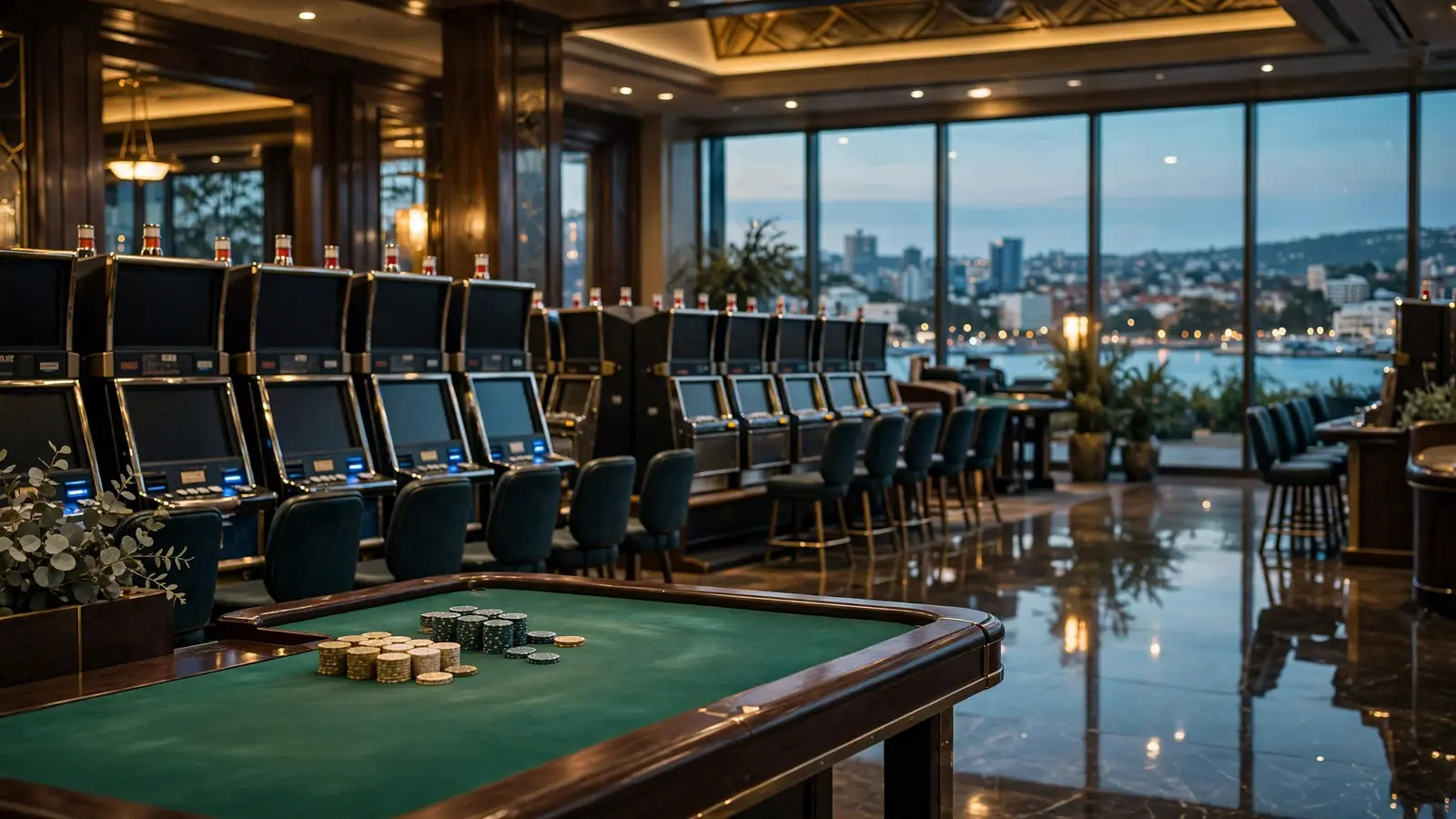
The same practical point applies to live baccarat, blackjack and other streamed tables. The video is part of the service, rather than decoration that can be ignored when estimating data use.
How table games affect bonuses
The important distinction is contribution, not the appearance of the game. Pokies generally contribute 100% toward wagering requirements. Table games and live casino titles often contribute 10% or less. A roulette bet therefore may count far less than its face value when you are using a bonus.
Read the promotion’s game contribution table before depositing. If roulette contributes 10%, a larger amount of play may be needed to produce the same wagering progress as pokies. Some terms may also distinguish between live and automated versions of the same table game, so do not assume that every roulette title receives identical treatment.
The headline multiplier deserves equal attention. Wagering requirements below 30x are considered good, while requirements above 40x should be questioned. Those figures do not make a promotion suitable by themselves: the contribution percentage can matter just as much as the stated multiplier. A seemingly modest requirement attached to low-contribution live games may be less useful than it first appears.
For that reason, separate the enjoyment of a streamed table from the value of a bonus. Choose the game format for its terms and connection demands, not because a live dealer label makes the promotion more favourable.
What to Check Before Using an International Crypto Casino
Crypto changes how funds may be handled; it does not change the legal status of an offshore casino serving Australian residents. Under the Interactive Gambling Act 2001, companies cannot offer unlicensed interactive real-money gambling services to people in Australia. That applies whether the cashier accepts conventional payment methods, cryptocurrency, or both.
Crypto Payments Attention Using cryptocurrency does not bypass Australian gambling restrictions or provide additional consumer protection.
An international online crypto casino should therefore be assessed as an offshore gambling operator first and a crypto service second. Digital assets are a payment context, not evidence that a site is licensed, safe, or approved for Australian customers. A casino that presents crypto deposits does not escape Australian restrictions, and using crypto does not create Australian consumer protection where none exists.
Check the operator’s licence
Look for a clearly identified offshore regulator and a licence number. Offshore casinos commonly used by Australian players may hold licences from Curaçao, Anjouan, or Malta. The licence should be identifiable on the operator’s website and capable of being checked with the relevant licensing authority. Treat an unexplained badge, a copied logo, or a vague claim of “international regulation” as insufficient.
Do not assume that a licence from one jurisdiction authorises the operator to accept customers everywhere. The casino must state whether it accepts players from your Australian state or territory, and its terms should not contradict that position. If the site does not identify a clear regulator, do not use it.
Check for ACMA action
The Australian Communications and Media Authority (ACMA) blocks access to non-compliant offshore online casinos and publishes lists of unauthorised platforms. Before trusting a crypto-focused site, check whether it has been targeted by ACMA. A cryptocurrency cashier does not make an operator exempt from blocking or regulatory attention.
You should also distinguish access from approval. The fact that a website loads, or that a wallet transaction can be initiated, does not mean the service is authorised in Australia. Do not use an offshore casino that is unlicensed, unclear about its regulator, or listed among services targeted by ACMA. The payment technology may be novel; the regulatory question is not.
Mobile Apps, Browser Play and the International Casino App Question
For Australian users, an international casino app is not necessarily the easiest way to access a mobile platform. Casino apps are rarely listed on Google Play or the Apple App Store because of store policies and gambling regulations. That absence does not automatically indicate a technical problem, but it does mean you should be cautious about how an app is obtained.

Browser access
Most mobile casinos are opened through Safari or Chrome. The browser version normally uses the same account, lobby, bonuses and cashier as the desktop site, so you do not need a separate mobile registration. It also requires no download or device storage. This is often the simplest option because you reach the casino through its official website rather than through an unfamiliar installer.
A browser platform can still provide a complete mobile lobby. Check that the site address is correct before signing in, particularly if you reached it through a message, advert or third-party page. Bookmark the official site once verified, and return to that bookmark instead of relying on APK links or unofficial redirects.
Progressive Web Apps
A Progressive Web App, or PWA, is a browser-based platform that can be added to a phone’s Home Screen. It offers a quicker launch while avoiding the restrictions of the major app stores. A PWA is not the same as a native casino app: it remains tied to the website and browser environment, even though its icon may look like an installed application.
Downloadable and native apps
A native casino app is installed directly on the device and may load faster, provide better graphics, push notifications or biometric login. Android users may encounter APK installation through a casino website when an official app is unavailable on Google Play. That route deserves particular care: use only the operator’s official site, avoid third-party APK links and review the requested permissions before installing.
iOS users can add a web app to the Home Screen instead of downloading an App Store product. Whatever access method you choose, confirm that the platform accepts your location and that its offshore licence is clearly identified. Do not treat an app’s presence, branding or smooth design as evidence of Australian approval; no Australian online casino licence exists.

Can I play mobile casinos for real money without an app?
Yes, you can use a mobile casino through Safari or Chrome without downloading an app. Some casinos also offer progressive web apps that can be added to your device’s Home Screen.
Can players make deposits, withdrawals, and complete verification through mobile casinos?
Yes, most mobile casinos provide deposits, withdrawals, and account verification through the mobile browser. You can generally access the same cashier and account features as on desktop.
Are online casinos legal in Australia?
Australian companies cannot legally offer real-money online casino games to Australian residents under the Interactive Gambling Act 2001. Individuals are not subject to legal penalties merely for accessing or playing at offshore platforms, but those sites are not licensed by Australia and may be blocked by the ACMA.
Why should players care about licensing?
Licensing shows which regulator oversees the operator, but an offshore licence is not Australian approval. You should check where the casino is licensed and whether it is permitted to serve Australian residents, because access can be blocked and Australian authorities do not provide local licensing protection.
Who regulates the Australian gaming industry?
The Australian Communications and Media Authority, or ACMA, enforces Australia’s online gambling restrictions. It can block non-compliant offshore casinos and publish lists of unauthorised platforms.
Published by the Casino Guide Au team.