
Best RTP Pokies in Australia: How RTP Works
 Available in US
Understand theoretical returns, independent spins, and the practical limits of RTP when comparing online pokies in Australia.

Table of Contents
- What RTP Actually Tells You About a Pokie
- High-RTP Pokies: Better Long-Term Maths, Not a Promise of Profit
- High-RTP Online Pokies and the Australian Access Problem
- The Highest-RTP Pokies Worth Putting on Your Shortlist
- Best RTP Online Pokies for Australian Players
- How to Compare Pokies with the Highest RTP
- Australian Pokies RTP: The Legal and Practical Context
- RTP Pokies with the Best Payout Potential: Read the Claim Carefully
What RTP Actually Tells You About a Pokie
RTP means Return to Player. It is the percentage of wagered money that a pokie is designed to return over a very large number of spins, based on its mathematical model. That makes RTP useful for comparing the long-term theoretical return of different games. It does not tell you what will happen during one visit, one deposit, or one sequence of spins.
Suppose a pokie has an RTP figure published in its game information. That figure describes the expected result across an extensive sample of play, not a promise made to each punter. Some sessions will finish ahead, some behind, and many will differ sharply from the theoretical average. The RTP figure only becomes meaningful when results are considered across a sufficiently large number of spins. A single session is too small and too unpredictable to reproduce that average reliably.
RTP is not a session forecast
Every spin on a pokie is independent. The previous result has no bearing on the next outcome. A run of losing spins does not make a win “due”, and a recent win does not make another win less likely. This is one of the most important points when reading pokies RTP information: the number describes the game’s long-term mathematics, not a sequence that can be used to predict upcoming results.
Independence also rules out several familiar but misleading ideas. A machine is not warming up because it has paid nothing for a while, and it is not cold because another punter has just won. Changing the stake after a losing result does not alter the underlying probability of the next spin. It only changes how much that spin costs and how large the possible result may be.


RTP should therefore be treated as a comparison measure rather than a timing tool. It can help you understand the theoretical design of a game, but it cannot identify a favourable moment to start, tell you when to stop, or indicate that a particular session will recover its losses.
RTP and volatility measure different things
RTP is concerned with long-term return. Volatility describes how that return tends to be distributed during play. These are separate characteristics, and looking at one without the other gives an incomplete picture of a pokie.
High-volatility pokies generally pay out less frequently, but their wins can be larger. Low-volatility pokies generally produce payouts more often, with smaller amounts. Neither description changes the game’s RTP. A high-volatility pokie can have a strong theoretical RTP while still producing long stretches without a significant win. A lower-volatility game can provide more regular payouts without guaranteeing that a session will finish profitably.
This distinction matters because “better RTP” does not necessarily mean “more frequent wins”. RTP does not tell you how often winning combinations appear, how large a typical payout will be, or how long a losing run might feel. Those questions relate more closely to volatility and the game’s paytable, features, and bonus mechanics.
When comparing pokies RTP Australia players may encounter, check whether the information gives RTP and volatility as separate specifications. If a description mentions only one, it has not provided a complete picture of the game’s risk pattern. A theoretical return percentage cannot stand in for every other feature that affects the playing experience.
Your stake is a separate decision
Bet size does not change a pokie’s RTP. It changes the amount of money exposed on each spin. Most online pokies allow bets ranging from a few cents to hundreds of dollars per spin, so the same theoretical return can sit alongside very different financial consequences depending on the selected stake.
Bet size changes the amount of money exposed on each spin, but it does not change the underlying RTP of the game.
A larger bet can produce a larger cash win when the relevant combination lands, but it also increases the cash lost when the spin does not produce a return. A smaller bet reduces the amount at risk on each spin, but it does not make the next outcome more likely to win. The game’s mathematical settings remain the same.
This is why RTP should not be converted into a personal budget or expected short-term result without care. Even if two games display the same RTP, their volatility may differ, and the same game can affect your funds very differently at different stake levels. The percentage describes the relationship between wagers and theoretical returns over the long run; it does not tell you how much money a particular session will consume.
How to read RTP information
Use RTP as one part of a factual game description:
- RTP: the long-term theoretical average returned by the game.
- Volatility: the pattern of payouts, including how often they tend to occur and how large they may be.
- Stake range: the permitted amount for each spin.
- Independence: the next result is not influenced by previous spins.
This framework keeps the terminology in proportion. A pokie with a higher RTP may look stronger on long-term mathematics, but that does not turn it into a reliable source of profit. A low-volatility game may offer more frequent smaller payouts, but those payouts do not guarantee a positive balance. A higher stake may increase the size of wins and losses, but it does not improve the odds of the next spin.
For anyone comparing RTP pokies or looking at claims about the best RTP pokies Australia offers, the sensible starting point is therefore precise rather than promotional: identify the theoretical RTP, read volatility separately, and treat every spin as an independent event. The figures can describe the game. They cannot describe your next session in advance.
High-RTP Pokies: Better Long-Term Maths, Not a Promise of Profit
A high-RTP pokie is attractive for a straightforward mathematical reason: over a sufficiently large number of spins, it is designed to return more of the money wagered than a comparable game with a lower RTP. RTP means Return to Player, and it describes a theoretical long-term average rather than a result you can claim from one visit, one deposit or one winning streak.
That distinction matters when you assess high RTP pokies Australia players may encounter online or in other settings. A higher theoretical return can make a game more appealing, but it does not turn gambling into an investment. The machine does not owe you a balancing win because earlier spins lost, and a strong RTP figure cannot tell you what will happen during your next session.
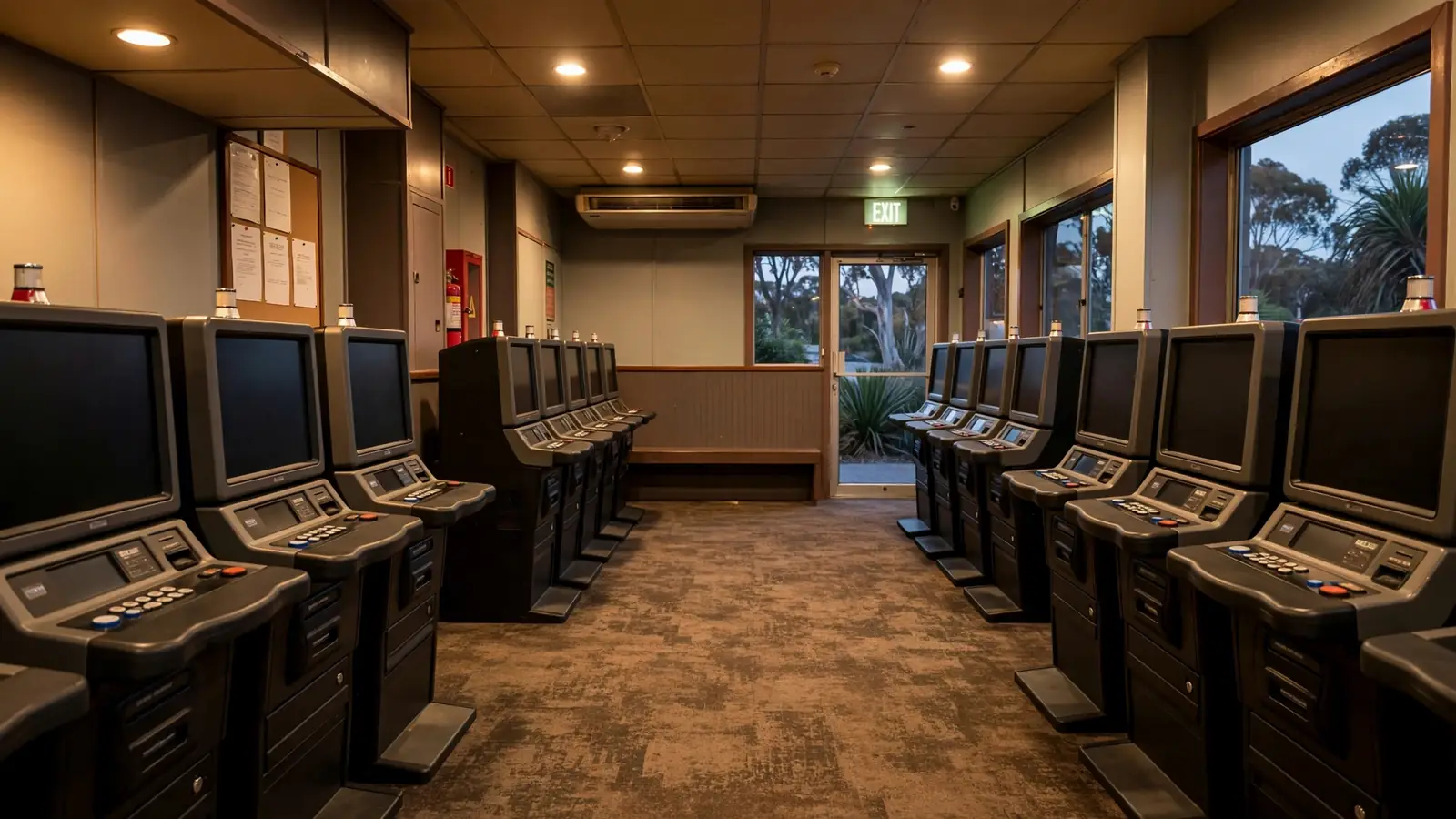

What makes a high-RTP pokie appealing?
The appeal is the difference between the game’s theoretical design and the amount wagered over time. If two pokies are otherwise similar, the one with the higher RTP gives the player the more favourable long-run mathematical position. That is the useful part of the claim.
It is also the limit of the claim. RTP is not a forecast for a particular punter. Each spin remains independent, so previous results have no bearing on the next outcome. A pokie with a high theoretical return can produce a losing session, while a lower-RTP game can produce a large win. Short-term results are capable of looking nothing like the long-term average. Mathematics is patient; your bankroll may not be.
The phrase “high RTP” should therefore be read as a comparison label, not as a promise. It tells you that the game’s stated long-term return is relatively strong within the group being considered. It does not tell you that the game will return money during the time you choose to play.
RTP is not the same as volatility
RTP and volatility describe different features of a pokie. RTP concerns the theoretical long-term return. Volatility describes how the wins tend to be distributed.
High-volatility pokies generally pay less frequently, but their wins can be larger. Low-volatility pokies tend to pay more often, with smaller amounts. Neither pattern overrides the RTP, and neither makes a result predictable. Two games can have a similarly attractive RTP while feeling entirely different because one produces frequent modest wins and the other produces longer periods without a payout.
Generally pays out less frequently, but wins can be larger.
Generally produces payouts more often, but with smaller amounts.
This is why a list of the best high RTP pokies should not be treated as a list of identical choices. A high-RTP game with high volatility may suit someone willing to tolerate longer stretches without a win in exchange for the possibility of larger individual payouts. A lower-volatility option may produce a steadier sequence of smaller wins, but it still cannot guarantee that a session will finish ahead.
The sensible question is not only “Which pokie has the highest RTP?” It is also “What kind of result pattern can I tolerate?” A high RTP does not compensate for choosing a volatility profile that quickly exhausts your intended budget.
Examples often associated with high RTP
Several established titles are frequently discussed when players compare high-RTP pokies. Blood Suckers is one example commonly included in those conversations, as are Fire Joker and Mega Joker. Their presence on a high-RTP shortlist should prompt you to examine the game information, not to assume that any named title is automatically the best choice for every session.
The same caution applies to the wording used by operators and reviewers. A title may be presented as high RTP because its theoretical return compares favourably with other games, but that description does not remove the effects of volatility, bet size or random outcomes. The label is useful for narrowing a selection; it is not evidence that a particular spin is more likely to win because earlier spins did not.
When comparing these games, keep the categories separate:
- RTP indicates the theoretical long-term return.
- Volatility indicates whether wins tend to arrive less frequently in larger amounts or more frequently in smaller amounts.
- Bet size determines how much is exposed on each spin.
- Session result is what actually happens during your chosen play period.
Confusing these categories is how a reasonable comparison turns into an unreasonable expectation.
Bet size still changes the practical exposure
Most online pokies allow bets ranging from a few cents to hundreds of dollars per spin. That range makes the relationship between RTP and bankroll especially important. A high RTP does not reduce the amount placed at risk on an individual spin. Choosing a larger bet means that each independent outcome has a larger financial effect, whether it wins or loses.
A smaller stake can limit the amount exposed per spin, but it does not improve the pokie’s RTP or guarantee that losses will be recovered. It simply changes the scale of the session. You should decide what amount you are prepared to lose before playing and avoid treating a higher RTP as a reason to increase that amount.
The same principles apply whether a game is described as an online pokie or a slot machine. The terms differ by local usage, but the reels, RTP and volatility are the same. Calling a game a pokie does not imply better odds, a different random process or any additional consumer protection.
High RTP pokies are worth considering because long-term mathematical return is a legitimate comparison point. They are not worth treating as a route to dependable profit. Read the RTP as one property of the game, check how its volatility fits your tolerance, and remember that the next spin has no memory of the last one.
Main Principle High RTP describes long-term mathematical design, not a guarantee of profit for your next session.
High-RTP Online Pokies and the Australian Access Problem
Searching for high-RTP online pokies can make the choice sound simpler than it is. RTP is a useful way to compare a game’s long-term theoretical return, but the online setting adds a separate question: whether the game can lawfully be offered to you in Australia at all. A pokie may have an attractive mathematical profile and still be unavailable through a domestically licensed online casino.
That distinction matters because the Interactive Gambling Act 2001 is the main federal law governing online gambling in Australia. Real-money online casinos offering pokies to Australians are banned under that law. Online casino games, including pokies, are prohibited from being offered to people in Australia, and there is no Australian licence for online pokies. No such licence has ever existed.
RTP does not create a legal route
A game’s RTP describes its theoretical return over a long run of play. It does not determine who may provide the game, where the operator is based, or whether the service has permission to accept Australian customers. The label “high RTP” is therefore not a substitute for checking the legal status of the product.
This is also why terminology can cause confusion. In Australia, “pokies” is the established local term for gaming machines. International operators and software companies may use “slots” or “online slots” for the same type of game. The underlying reels, RTP and volatility do not change merely because the wording changes. Nor does the word “pokies” indicate Australian licensing, local consumer protection or lawful access.
A punter comparing pokies with high RTP should keep those issues separate:
- RTP: the game’s long-term theoretical return.
- Volatility: how frequently and how unevenly wins may arrive.
- Availability: whether the game is offered through a service that may legally provide online casino games to Australians.
- Payment rules: whether the chosen payment method is permitted for online wagering in Australia.
Only the first two are characteristics of the game itself. The other questions concern the service and the market.
Why the online label changes the practical choice
An online catalogue can contain many titles associated with high RTP, but a catalogue is not evidence of an Australian casino licence. Since no Australian licence exists for online pokies, a site presenting real-money online casino games to Australians is not operating under a domestic online-pokies licence. That is the uncomfortable part of the comparison, and hiding it behind a list of game features would give you the wrong impression.
The legal position targets providers rather than individual punters. The Interactive Gambling Act prohibits providers from offering prohibited interactive gambling services to Australian customers; it does not make the Australian player the enforcement target. That distinction should not be stretched into a quality guarantee. A site being accessible does not establish that it is locally licensed, that its terms are fair, or that its dispute process will match Australian expectations.
Offshore availability creates the same separation. A game may be listed by an offshore operator, but offshore access is not the same as access through an Australian-regulated online casino. If you are assessing a real-money service, look at the jurisdiction named in its own licensing information and the rules that govern complaints, identity checks and withdrawals. Do not infer legality or better odds from the local word “pokies”, the presence of Australian dollars, or an Australian-facing design.
Legal Restriction Real-money online casinos offering pokies to Australians are prohibited under the Interactive Gambling Act 2001.
Payment restrictions are part of the access problem
The payment environment adds another limitation. A regulatory update reported by a specialist gambling industry review states that, since 11 June 2024, credit cards, credit-related products and cryptocurrency have been banned as payment methods for online wagering in Australia. That restriction is relevant when a site describes itself as serving Australians, but it does not turn an unlawful online casino product into a permitted one.
It also means that payment availability should not be treated as proof of legitimacy. A familiar method, an Australian currency option or a local-looking payment page says nothing by itself about the game’s RTP or the operator’s authorisation. The product must first be distinguished from licensed online wagering, such as permitted sports and racing bets, lotteries or keno. Online casino pokies belong to a different legal category.
What “high RTP online” can honestly mean
In practical terms, the phrase can refer to a game designed with a comparatively strong theoretical return and made available through an online catalogue. It cannot honestly mean “an Australian-licensed online pokie”, because that licence does not exist. Nor can it mean a predictable result for your next session. Each spin remains independent, and the previous result has no bearing on the next outcome.
You can still use RTP as a comparison tool when reading game information, provided you do not let the online format blur the boundaries. Check the game’s stated RTP, note its volatility, and treat access, operator status and payment rules as separate checks. If a page presents a high-RTP title without clearly explaining those distinctions, its marketing is doing more work than its evidence.
For Australian readers, that is the central practical lesson: high RTP may describe the maths of a pokie, while online access describes the legal and operational setting. They are related only because you encounter them on the same page. One does not validate the other.

The Highest-RTP Pokies Worth Putting on Your Shortlist
If you are building a shortlist around return to player, start with the published game information rather than a promotional label. RTP is a long-term theoretical average, not a forecast for your next spin or session. Two pokies can also share a similar RTP while feeling entirely different because of volatility: high-volatility games tend to pay less frequently but can produce larger wins, while low-volatility games tend to pay more often in smaller amounts.
The titles below are associated with high-RTP searches and are worth checking when comparing game specifications. The exact configuration matters, so read the information shown for the version available to you.
1. Blood Suckers
Blood Suckers is one of the most frequently mentioned names in discussions of high-RTP pokies. Its appeal is not simply the headline figure. You should also check its volatility and the way its bonus features affect the rhythm of play. A strong theoretical return does not make individual results predictable, and each spin remains independent of the last.
2. Fire Joker
Fire Joker belongs on a shortlist for readers looking for a comparatively high-return pokie with a straightforward presentation. It is a useful comparison point because the RTP figure should be considered alongside volatility, paylines, and the available bet settings. Those details influence how the game behaves during a session, even though they do not change the basic meaning of RTP.
3. Mega Joker
Mega Joker is another established title associated with the highest-RTP pokies category. When assessing it, distinguish between the game’s theoretical return and its jackpot or feature structure. A jackpot can make the game look attractive in promotional material, but it does not turn a long-term statistic into a personal guarantee. Check the game rules and the displayed configuration before staking real money.
Common High-RTP Titles Blood Suckers, Fire Joker, and Mega Joker are frequently discussed in high-RTP conversations. Always verify the specific version and its volatility before playing.
4. Book of Dead
Book of Dead is widely recognised and often appears in comparisons of high-return pokies. Its inclusion on a shortlist should not be read as a claim that it will outperform every other game in every session. Compare its volatility with your preferred playing style: a higher-variance experience may involve fewer winning spins and larger potential outcomes, while a lower-variance option may produce smaller wins more regularly.
5. Dead or Alive 2
Dead or Alive 2 is worth considering if you want to compare a high-RTP candidate with a more feature-led design. Look beyond the title and promotional language. The relevant checks are the RTP shown for the specific version, the volatility description, the paytable, and the conditions attached to any bonus feature. If one of those details is unavailable, the comparison is incomplete.
6. Devil’s Delight
Devil’s Delight can be added to a wider shortlist when you want more than the most commonly cited names. As with every other pokie, the stated RTP describes a theoretical long-run average across a very large number of spins. It says nothing definite about whether your own session will finish ahead, behind, or close to the amount staked.
RTP Long-term theoretical average
Volatility Payout distribution pattern
Independence Each spin is a random, unrelated event
7. Wolf Gold
Wolf Gold is another named game to check when comparing high-RTP options. Its presence on a shortlist is not a recommendation to stake more or to chase a result. Review the game’s volatility and betting range, then decide whether its characteristics suit the amount you intend to risk. The RTP remains only one part of that assessment.
8. Mega Moolah
Mega Moolah is commonly associated with large jackpot attention, but jackpot branding should not be confused with RTP. A game can attract interest because of its prize structure while still requiring careful reading of the underlying rules. Treat the published RTP as a mathematical description, not evidence that a particular bonus or jackpot outcome is due.
For Australian readers, “pokies” and “slots” describe the same basic type of game: the reels, RTP, and volatility do not change merely because the terminology changes. Where a platform presents a real-money version, independently audited random number generation is an important fairness safeguard. It still does not remove the uncertainty of each spin. A sensible shortlist therefore contains titles you can compare on their stated RTP, volatility, rules, and bet settings—not names presented as guaranteed winners.
Best RTP Online Pokies for Australian Players
This shortlist brings together operators worth checking when exploring high-RTP pokies in Australia for 2026. Use each verdict to quickly review the available licensing, bonuses, deposit requirements, and payout information.
License: Curacao eGaming Licence · Min. deposit: A$10 Rocket Play stands out for its Curacao eGaming Licence and low A$10 minimum deposit.
Bonus: 100% up to A$750 + 200 free spins, 35x wagering · Payout speed: crypto 30-120 minutes, fiat 24-72 hours · Min. deposit: A$30 MrPacho offers a 100% bonus up to A$750 plus 200 free spins, with 35x wagering. Crypto payouts are stated at 30–120 minutes and fiat payouts at 24–72 hours, while the minimum deposit is A$30.
License: Curacao eGaming Licence · Min. deposit: A$10 PlayCroco is listed with a Curacao eGaming Licence and a low A$10 minimum deposit.
Bonus: up to A$6,600 + up to 250 free spins across 4 deposits DragonSlots Casino features a bonus of up to A$6,600 plus up to 250 free spins distributed across four deposits.
License: Curacao Gaming Control Board (TechSolutions Group N.V.) · Bonus: 100% up to A$250 + 100 free spins (1st deposit) Bizzo Casino lists a Curacao Gaming Control Board licence through TechSolutions Group N.V. Its first-deposit offer is a 100% bonus up to A$250 plus 100 free spins.
License: Curacao eGaming (Dama N.V.) · Bonus: up to A$10,000 + 180 free spins, 40x wagering JeetCity Casino operates under Curacao eGaming through Dama N.V. and offers up to A$10,000 plus 180 free spins with 40x wagering.
License: Curacao · Bonus: up to A$10,000 multi-stage + 500 free spins · Min. deposit: A$20 (POLi) Lucky Dreams offers a multi-stage bonus of up to A$10,000 plus 500 free spins. The minimum deposit is A$20 when using POLi.
License: Curacao, operated by Dama N.V. · Bonus: 325% up to 5.25 BTC + 250 free spins across 4 deposits 7Bit Casino is licensed in Curacao and operated by Dama N.V. Its offer is a 325% bonus up to 5.25 BTC plus 250 free spins across four deposits.
License: international iGaming licence – jurisdiction not named in the source · Bonus: 100% up to A$1,000 + 100 free spins, 35x wagering · Payout speed: PayID 1-24 hours · Min. deposit: A$30 (PayID from A$10) House of Pokies lists a 100% bonus up to A$1,000 plus 100 free spins with 35x wagering. PayID payouts are stated at 1–24 hours, and the minimum deposit is A$30, or A$10 via PayID.
License: Tobique Gaming Commission · Bonus: up to A$8,000 + 400 free spins across 4 deposits · Payout speed: crypto ~10-15 minutes, fiat 1-5 days · Min. deposit: A$30 SkyCrown lists a Tobique Gaming Commission licence and offers up to A$8,000 plus 400 free spins across four deposits. Crypto payouts are stated at around 10–15 minutes, while fiat payouts take 1–5 days; the minimum deposit is A$30.
Online pokie comparisons need one important distinction: the game and the platform are separate things. A title may have a published RTP and a recognisable volatility profile, but that does not tell you whether a particular website may lawfully offer it to Australians. It also does not turn a game into a recommendation or make a session predictable.
The familiar Australian term is pokies. Online pokies and slot machines use the same reels, RTP and volatility; the terminology changes with the market, not the underlying mathematics. That makes the following titles useful for comparing online game characteristics, while leaving access and legal status as separate questions.
Games commonly considered by Australian punters
- Gonzo’s Quest — A named online pokie associated with the NetEnt game catalogue. Its inclusion here identifies the title, not a guaranteed return or a preferred operator.
- Starburst — A NetEnt title frequently recognised for its online presentation. As with any pokie, its reels, RTP and volatility are properties of the game rather than evidence of a particular result.
- Sweet Bonanza — A Pragmatic Play game that appears in online pokie catalogues. The provider name can help you identify the intended title, but it says nothing by itself about legality, fairness or better odds.
- Buffalo King Megaways — An online pokie from the Big Time Gaming catalogue. The Megaways format describes the game’s reel system; it is not an RTP figure and should not be treated as one.
- Book of Dead — A Play’n GO title available in online-game catalogues. Its presence on a website does not establish that the website is permitted to offer online casino games to an Australian customer.
- Big Bass Bonanza — A Pragmatic Play title commonly encountered in discussions of online pokies. The name alone does not indicate licensing, payment support or consumer protection.
This list is deliberately not ranked by unsupported percentages. A claim that a pokie is “best RTP” requires the relevant game configuration and reliable game information; a title name alone cannot supply that detail. It is also worth checking that you are comparing the same version when a game exists across different releases or configurations.
Online access is a separate issue
The legal position matters more than the word “online” in a game description. Real-money online casinos offering pokies to Australians are banned under the Interactive Gambling Act 2001, and online casino games, including pokies, are prohibited from being offered to people in Australia. There is no Australian-facing online casino licence that changes that rule.
Australian residents can legally play online pokies at licensed offshore casinos, but that describes where the operator is licensed, not an Australian licence or domestic approval. Offshore casinos operating from Curaçao, Anjouan or similar jurisdictions may accept Australian players. If you inspect an operator, treat its external licence and its actual terms as separate from the game’s RTP. The game title cannot compensate for unclear ownership, missing rules or uncertain withdrawal conditions.
A further practical distinction concerns random outcomes. Licensed Australian-facing platforms are required to use independently audited random number generators. That requirement relates to the platform’s operation and the generation of outcomes; it does not make any individual spin more likely to win. Each game remains a sequence of random results, and the label “high RTP” should never be read as a prediction for your next session.
A sensible way to read an online-pokie listing
Use the title list to identify games you may want to investigate, then check the game information supplied for the exact version. Look for the stated RTP and volatility, and keep those features separate from the operator’s location, licence and availability to Australian residents. A familiar provider, a popular title or the word “pokies” is not proof of licensing, fairness or better odds.
Player Checklist
- Confirm the RTP figure for the specific game version
- Check the volatility profile against your budget
- Verify the legal status and jurisdiction of the operator
- Ensure your preferred payment method is permitted
That is the useful meaning of best RTP online pokies Australia: compare the mathematics of named games first, then examine whether the proposed route to play is lawful and transparent. The two checks answer different questions, and combining them produces a misleadingly confident answer.
How to Compare Pokies with the Highest RTP
Comparing pokies with the highest RTP starts with separating the published return figure from the way a game delivers its wins. RTP, or Return to Player, is a long-term theoretical average. It can help you compare the underlying mathematics of different games, but it cannot forecast the result of your next spin or tell you what a single session will return.
A practical comparison method
Use the following checks before treating one pokie as a stronger mathematical choice than another:
-
Confirm that the RTP figure applies to the version you can play. A game may have different configurations, and the relevant figure is the one attached to the actual version available on the platform. Do not assume that a familiar title has the same settings everywhere.
-
Compare RTP figures on the same basis. RTP is useful when the figures are measured consistently. A small difference between two published percentages should not be treated as a short-term advantage or a prediction of profit. It describes theoretical return over a very large number of spins, not a personal result.
-
Check volatility separately. Volatility describes the pattern of payouts. High-volatility pokies tend to pay less frequently but can produce larger wins. Low-volatility pokies tend to pay more often in smaller amounts. Two games can therefore have similar RTP while feeling completely different during a session.
-
Consider the bet size you intend to use. RTP does not make a larger stake safer or improve the mathematical return of each spin. Since every spin is independent, increasing the bet does not recover earlier losses, and a previous win does not make the next result more likely.
-
Read the game information, not just the headline figure. Look for the displayed RTP, volatility information where provided, paytable, winning combinations, and any features that affect how the game operates. This gives you a clearer picture than relying on a label such as “high RTP” alone.
-
Check the platform’s testing information. Licensed Australian-facing platforms are required to use independently audited random number generators. That requirement concerns the randomness of outcomes; it does not turn RTP into a guarantee or make a high-RTP game certain to outperform another in your session.
What the comparison cannot tell you
A shortlist based on RTP can identify games with more favourable long-term theoretical mathematics, but it cannot identify a guaranteed winner. It cannot show which pokie will pay first, which spin will produce a feature, or whether your balance will rise during a particular visit.
The soundest comparison is therefore two-part: use RTP to assess long-term theoretical return, then use volatility and the game rules to understand the likely shape of payouts. Treat the figures as comparison information, not as a promise attached to any individual spin.
Australian Pokies RTP: The Legal and Practical Context
The phrase “Australian pokies RTP” can sound as if Australia has its own online pokie licence or a separate national return-to-player standard. It does not. RTP (Return to Player) describes a game’s long-term theoretical return, while “Australian” describes the market or audience being discussed. The location label does not change the game’s mathematics, create a local licence, or confirm that a platform may legally offer the game.
- Use RTP as a long-term mathematical comparison tool
- Read volatility and paytable information separately
- Treat every spin as an independent event
- Treat high RTP as a guarantee of profit
- Use RTP to predict the outcome of a single session
- Assume “pokies” implies Australian licensing
What Australian law covers
The Interactive Gambling Act 2001 is the main federal law governing online gambling in Australia. Under this framework, online casino games, including real-money pokies, cannot be offered to Australian customers by a domestically licensed online casino. There is no Australian licence for online pokies, and none has ever existed.
That distinction matters when a website uses phrases such as “Australian pokies” or “Australian RTP pokies”. Those words may describe games marketed to Australian readers, but they are not evidence of Australian regulation. They also do not establish that the operator is licensed locally, that the game has been approved by an Australian authority, or that Australian consumer protections apply.
The legal position concerns providers rather than making the RTP label itself unlawful. A punter should therefore separate three questions:
- What RTP does the game publish?
- Who supplies or operates the game?
- Is that product legally available to Australians through the relevant channel?
RTP answers only the first question. It cannot answer the other two.
What remains available
Australian gambling law does not prohibit every form of gambling. Legal options include land-based casinos, licensed bookies and lotteries. Online products that may be permitted and licensable include pre-event sports and racing wagering, lotteries and keno, subject to the applicable licensing arrangements.
This is why “pokies” needs careful handling in an Australian context. In local usage, the term commonly refers to electronic gaming machines, particularly those found in physical venues. The same word may also be used by offshore websites to describe online casino games. The terminology is familiar, but familiarity is not a licence.
For practical reading, treat “Australian pokies RTP” as a description of a search topic, not a regulatory category. Check the game’s stated RTP separately from the legal status of the product being offered. A local Australian casino licence for online pokies cannot be checked because no such licence exists; claims suggesting otherwise deserve scepticism rather than a more enthusiastic click.
RTP Pokies with the Best Payout Potential: Read the Claim Carefully
“Best payout” can mean several different things, and promotional copy often leaves the distinction blurred. A pokie may have a high RTP, frequent small wins, or the potential for a large single prize. These are separate characteristics, not interchangeable labels.
RTP Is Not a Prediction of Your Payout
RTP, or Return to Player, is a long-term theoretical average. It describes how a game is designed to perform across a very large number of spins, not what you should expect from one visit or one bankroll. It does not guarantee a profit, a winning session, or even a return from a particular sequence of spins.

Each spin is independent. A previous loss does not make a win more likely, and a recent win does not make the next result “due” to be worse. That makes claims about the best payout potential especially easy to misread: a strong theoretical return remains a statistical property, not a promise attached to your next spin.
Frequency and Size Are Different
Volatility helps explain why two pokies with similar RTP can feel completely different. High-volatility pokies tend to pay less frequently, but their wins can be larger. Low-volatility pokies tend to produce wins more often, with smaller amounts. Neither profile automatically offers the best outcome for every punter.
If you prefer longer stretches with occasional smaller returns, a lower-volatility game may fit your approach more closely. If you accept less frequent wins in exchange for the possibility of a larger result, a higher-volatility pokie may appear more attractive. The trade-off does not change the independence of each spin or turn volatility into a forecast.

Bet size adds another layer. Online pokies can allow wagers from a few cents to hundreds of dollars per spin. A larger stake can increase the cash value of a win, but it also increases the amount exposed on every spin. It does not improve the game’s RTP or make a favourable result more likely.
A Better Reading of “Best Payout”
Treat “best payout” as a prompt to inspect the game’s RTP, volatility, paytable, and maximum bet rather than as a ranking of guaranteed winners. Check whether the claim refers to frequent payouts, large potential wins, or long-term theoretical return. Those descriptions should not be collapsed into one headline.
The most accurate conclusion is narrower: a higher-RTP pokie may offer better long-term mathematics than a lower-RTP alternative, while volatility affects the pattern and size of wins. Neither factor can identify the result of your next spin.
What are the highest-RTP pokies available to Australian players in 2026?
A higher RTP can indicate better long-term theoretical returns, but it does not guarantee a profit or a winning session. Compare the published RTP with volatility, stake range and the game’s independent-spin design.
What are the new gambling laws in Australia?
The Interactive Gambling Act 2001 is the main law governing online gambling, and real-money online casinos offering pokies to Australians are prohibited. Since 11 June 2024, credit cards, credit-related products and cryptocurrency have also been banned as payment methods for online wagering.
What are the KYC checks required by operators?
Operators require account verification before processing some withdrawals, including PayID withdrawals. Verification must be completed before funds can be released.
Is play fair on the online casinos?
Licensed Australian-facing platforms are required to use independently audited random number generators, and every spin is independent of previous results. However, online casino games, including pokies, are prohibited from being offered to people in Australia.
Prepared by the Casino Guide Au editorial staff.